vendredi 31 juillet 2009

Exhibitors will be rewarded on Customer Care at the end of the exhibition


PSF and RBD will be rewarding exhibitors on good Customer Care Service


Kigali — The 2009 Rwanda International Trade Fair (RITF) has opened today at the Gikondo expo ground.The 12th trade fair, which will run till the 10th of August 2009, is said to have attracted 419 exhibitors from within Rwanda, the region and afar. This year's turn up increased by 34 percent as compared to 300 exhibitors registered in 2008.


Ten countries are confirmed present some of which include: India, Dubai, Turkey, Egypt, Ghana, Kenya, Uganda, Tanzania, Rwanda and Burundi. According to the Private Sector Federation (PSF), organisers of the expo, there is an increase in the number of exhibition stands owing to the high turn over of participants.

There are 664 stands this year compared to 564 set up last year.


Ahead of the expo, local exhibitors and traders were trained in customer care services.

[trainngs delivered by Sandra IDOSSOU from SHEI & ENZ COnsulting]


The two days training was to equip exhibitors with knowledge to lure and satisfy customers. This will see customer care service providers awarded. Winners will be announced daily and awards to be given to overall winner at the end of the trade fair.


This new awarding initiative was introduced by the PSF in collaboration with the Rwanda Development Board (RDB).


The Federation's CEO, Emmanuel Hategeka explained that the public will cast by using their expo tickets and customer care boxes and winners will be awarded customer care prizes.


Sandra Trains Exhibitors Customer Care


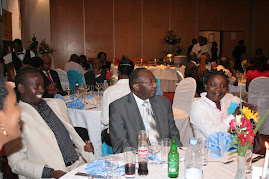
Some participants


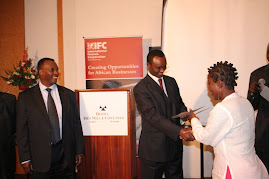
Participants doing role plays

Participants


Sandra IDOSSOU trains more than 150 exhibitors of the Rwanda International Trade Fair.

The 2 days trainings were organized by the Private Sector Federation.
Here is the article on this training in the Rwandan New Times


"Local exhibitors and traders are gathered at expo ground for a two-day training, on customers care service as part of the 2009 International Trade Fair preparations.

Customers care is a new initiative in this upcoming trade fair where there will be an introduction of the awards on the best customer care service provider.


The awards are introduced by the Private Sector Federation (PSF) in collaboration with the Rwanda Development Board (RDB).

This was announced by Emmanuel Hategeka the Chief Executive Officer CEO in PSF during a press conference at the federation’s offices to highlight the status of preparations. The 2009 expo is scheduled to take place from the 30th of July to the 10th August.

CEO PSF


Hategeka said that a customer care stand at the expo is set to promote good customer care practices and standards using a range of promotional and educational materials.

“Customer care awards for exhibitors will be introduced; The public will cast by using their expo tickets and customer care boxes and winners will be awarded customer care prizes,” Hategeka said.

Winners will be announced daily and awards to be given to overall winner at the end of the trade fair.Poor customer services in the country have been identified and a National Customer Care steering committee was established to address the problem effectively.

“The whole idea of the training is to create an opportunity for local traders to be equipped with relevant customer care skills that are needed to increase their competitiveness at this year’s trade fair,” said Clare Akamanzi the Chairperson of the customer care steering committee.

Akamanzi added that the committee also aims at increasing awareness on the importance of good customer service. The committee is optimistic that the situation will tremendously improve in the very near future.

According to a press statement issued there after, Workforce Development Authority has also conducted various training sessions in the hospitality and transportation sectors. Training programs include teaching basic language skills in English as well as imparting expertise on customer handling"

dimanche 26 juillet 2009

Lets Learn to keep our Promises


CUSTOMER CARE: Lets learn to keep our promises


by Sandra idossou


I had an appointment for 4 pm with a service provider and when I arrived there, he wasn’t there. Even though, I had called in the morning to reconfirm the appointment, this man just didn’t respect the appointment.
He didn’t leave any message; didn’t call me to inform me of the change of the program. Apparently, he forgot about it meaning he didn’t take serious his own word.


I am writing about this because this is not the first time I have experienced such unmannered habits. It is such a shame that it is becoming difficult to trust people’s words these days. It just looks as if people do not give any importance to their promises.


Customer service means keeping promises. Your promises to build trust and understanding and create great customer loyalty.


As customers, we all evaluate a company based on how well they respect their promises. It is said that “a promise is a debt” and here are four reasons for keeping your promises:


Keeping promises is a sign of courtesy and respect
Courtesy as we have described before is a sign of respect towards others.


Always, remember that when you book and appointment with someone, the other person adapts his program on your appointment.


If for one reason or the other, a last minute unplanned event prevents you from honouring your engagement; please call to inform before. Don’t just make the person come just to see that you are unavailable. If you have to be late for 10 or 15 minute, please call as well to inform. Don’t assume that 15 minutes late is not too serious. As we said last week, time is money even in Rwanda.


Keeping promises means knowing your company promises.
If you tell your customers that your offices are opened from 7.30 till 5PM non-stop, you need to respect that. Make sure that during lunch period, there is always someone there to serve your customers.


The last time I went to this office at 1 pm, I had to wait for one good hour before the service person came back. There was no whatsoever information written on their lunch hours services.

The writer is a customer care consultant.


She can be reached at sandra.idossou@sheiconsulting.com

dimanche 19 juillet 2009

Boosting your Sales through your Contact Staffs


http://newtimes.co.rw/index.php?issue=13962&article=1817&week=30


CUSTOMER CARE: Boosting sales through contact staffs
by Sandra idossou

Last month, my mum arrived here and told me of her extremely first positive experience at the Kigali International Airport.

She had wanted to buy some drinks at the duty free shop and when she entered the shop, the lady welcomed her with a big smile and availed herself to her.

Even though mum could not find the exact drinks she was looking for, the sales lady insisted that she tries other types.

Apparently, the lady was professional enough to convince mum to buy something different from her initial plan. And as Mum later on admitted; it was the friendliness and professionalism that made her buy.

I personally think that sometimes sales people don’t imagine how effective their attitudes boost their sales.

When we talk of sales, we need to understand that it is not only people in shops who sell. This is because we are all in sales. Anytime we try to influence someone’s actions or thoughts, when we are selling.

I have often gone to companies that spend huge money on advertising and branding of their products only to let down by the staff.

Advertisement alone is not enough if you do not take time to train your staffs on selling techniques. Your front line staff should be trained in such a manner that cordiality and hospitality become their first minimum required assets.

Here below are some selling principles for all contact staffs.

1. Acknowledge straight away your clients


Whether you will be ready to provide service in one or twenty minutes, an early acknowledgement says “I’m glad to see you and I value your coming here. We will help you as soon as possible. Thank you for your patience.”

Your acknowledgement is often just an eye contact, a smile or a hand gesture. How many times have you walked in a store and you weren’t acknowledged? How did you feel?
Eye contact is a very powerful form of acknowledging the customer.

2. Ask your customers how you may be help to them
A customer who enters your shop doesn’t come because he is bored at home. He comes because he has a need. Be interested in your customers and inquire about their needs. Learn to ask questions and listen carefully. Respond appropriately.

As a sales person, you become a consultant to the customer as you can advise and even suggest new products unknown to your customers.

3. Then serve the customer without wasting time

Any other issue should wait while the customer is right there in your shop.
Your conversation with your friends; your chat on messenger, your papers works etc should all be put on hold while you are serving the customers;
And please, avoid dragging your feet. Be energetic and fast. No one wants to waste too much time today. Remember Time is Money….even in Rwanda.


4. Thank your customer

This is often forgotten or neglected. Service staff should thank automatically all their customers for coming to do business with them.

Thanking the customer means that you appreciate his patronage. Wish them a good day and invite them to come back again.Even if they didn’t buy, still be pleasant with them while they are leaving your shop. This positive last impression will bring them back.

I’m sure that if you put these principles into practice, you will see the results on your bottom line.

The author is a customer service expert currently working in Rwanda.

lundi 13 juillet 2009

Courtesy implies Grooming


CUSTOMER CARE: Courtesy implies good grooming standards

BY SANDRA IDOSSOU

http://newtimes.co.rw/index.php?issue=13955&article=1785&week=29

With last week article on Courtesy, I had another reader who was concerned about standards of good grooming.

Though we have in the past done an article on First Impressions, there is according to him, a real need to emphasize on grooming standards as unfortunately, many still neglect them.

Apparently, James went to this bank on Friday and the service lady was dressed as if going to the night club. She had very tight jeans revealing her string.

Probably, some of the male customers were happy for that free show but James wasn’t sure they all found her dressing professional. There was also this male cashier in sweatpants as if going to the gym.

I know of this general rule of casual dress down on Friday but business owners need to define clearly to which extent their staff could go casual. Does casual mean shabby, dirty, untidy, torn, sexy, wrinkled, frayed or unprofessional?

Traditionally, certain professionals such as bankers have to uphold the image that they are serious about their work, especially since their work involves handling customers’ money.

Normally, clothing that are worn to go to the lake, the market, garden, nightclubs, exercise sessions, and sports are not always appropriate for a professional appearance especially in corporate and administrative companies.

Courtesy as we described last week was everything that we do in using accepted and appropriate manners and behaviors towards people we dealt with. These manners are also seen in the way we are dressed and groomed.

Her Majesty Queen Elizabeth says that “Dress gives one the outward sign from which people in general can, and often do, judge upon the inward state of mind and feelings.”

Service people should know that good grooming accounts for 55% of impact on their first impression. It is therefore not just enough to have just a bath. Good grooming values our appearance and shows how courteous we are towards ourselves and other people.

Below are some areas of Good Grooming standards that should not be neglected: Body odor
This is a constant source of turning away potential customers.

It is most often caused by improper hygiene; sometimes, it may just be a sickness that needs to be dealt with. If you have friends or colleagues who have this problem, do inform them as most a times, they’re usually the last ones to be aware of their smelling problems.


Bad breath
This is another big issue!! Please take time to brush your teeth well. Remember the smell of coffee or cigarette is not always a pleasant one. Try to gargle and use frequently a breath freshener especially after lunch.

Hair
Your Hair should be shampooed very often as this keeps it clear of dandruff.

Men, your face must be clean shaven at all times and not only on Mondays. Ladies, please wash your braided hair frequently to prevent them from smelling especially if you keep those braids for a longer period.

Remember that untidy hair does not inspire any confidence or indicate a sense of orderliness.

Hands and nails
These should be clean, short and well cared for. Please ladies, make sure your nail polish is not peeled and chipped. It is better not to any nail polish than to have it half chipped off.


Makeup and jewelry For those who wear makeup, this should be lightly applied. Your make up for the office should be different and lighter from the one you put on for a dinner party. Jewelry should be limited and discreet.

Footwear
You would be surprised at how many people judge you by your shoes!!! Your Shoes count for a lot in your outfit. Sloppy and scuffed shoes with worn heels will ruin the look of your outfit. Do go for comfortable shoes.

Men need to wear good clean socks, polished and comfortable shoes. Please consider the color of the socks and match them to the color of your trousers.

Dark trouser should go with dark socks. No white socks please! They are for tennis. Mickael Jackson’s white socks on a black pant are no more in vogue.

Always remember that the more professional you are groomed, the more credible and competent you will appear to others. Good grooming manners are a sign of courtesy and respect towards yourself and others.

Decide today to pay more attention to these little details and you will send positive good impressions of yourself and of your business.

The author is a customer service expert currently working in Rwanda.

sandra.idossou@sheiconsulting.com


dimanche 5 juillet 2009

Common Courtesy in Service


CUSTOMER CARE: Common courtesy in service

BY SANDRA IDOSSOU
This is part of an email I received from Anita, a dear reader of The New Times.

“Dear Sandra, please write about this issue we all face on courtesy. It just seems as if many service providers don’t know what it entails. I went to this company and as I was dealing with the staff, someone came in and this guy just forgot that I was sitting right in front of him. He chatted and laughed for a long time while I was sitting there waiting for him to finish. And to make matters worse, when he finished, he didn’t even apologize. I have the impression many people are brought up never being taught how to be courteous especially while dealing with customers.”

Well, just like Anita, we all have one way or the other suffered from the lack of courtesy from service providers. Today, good manners, common courtesy and polite attitudes have declined in most of our societies.
Courtesy is defined as using accepted and appropriate manners and behaviors. It is generally a component within the customer service strategy of any organization and is therefore very needed in all human encounters but here, I would like to talk about the three sides of courtesy.


1. Courtesy to your staff as an owner or director

In all its forms and styles, courtesy behaviors should be hailed by everyone from the CEO of an organization down to the cleaner.

Common courtesy makes you the General Manager greet your staff in the morning or thank them for bringing your tea or water to your office. Courtesy is simply a sign of respect and civility towards people we deal with.


Erastus Wiman says that “Nothing is ever lost by courtesy. It is the cheapest of the pleasures costs nothing and conveys much. It pleases him who gives and him who receives, and thus, like mercy, it is twice blessed”

2. Courtesy from the customers to the service staff

The next time you find a queue, please learn to respect it. Do not jump on others or disrespect the other customers waiting to be served.

Do treat the service staffs with respect and talk politely to them. Do not undervalue them. Learn to say please and thank you to them. Note that people who behave courteously are known as ladies and gentlemen.

Once in a while, we often have something like an appraisal meeting with our home staffs. The last time we had this at the end of the year, we seized the opportunity to thank the cook and show him our appreciation.

Our cook was just shocked with this and he told us, he was just doing his job and never expected us to thank him. But for us, that is courtesy and consideration.


3. Courtesy from the service staff to the customer

Courtesy behaviors are those small gestures that define how thoughtfully you treat your customers on a daily basis.

It is expressed as a wide range of respectful behaviors and positive attitudes such as arriving early at work, using a friendly smile (even over the phone), using Ms, Mr and people’s last names, maintaining a neat appearance and using proper, moderate language, stopping whatever you are doing when talking to customers and showing listening skills (attentiveness) and being courteous in all interactions regardless of circumstances.

It also includes treating all your customers with respect irrespective of their social statute, class, origin, color, height, dress standards.

Avoiding chewing gum or picking on your teethes of nose in front of your customers, keeping your promises, apologizing to the customer in front of you when you have to pick up the phone, using frequently words like please, excuse me, thank you, I’m sorry and yawning, coughing and sneezing by covering your mouth and using a tissue, handkerchief or hand.

Common courtesy counts because it conveys caring in little ways and causes the giver to act thoughtfully and the receiver to feel treated with consideration. This will definitely impact on your customer’s loyalty.

The author is a customer service expert currently working in Rwanda.

lundi 29 juin 2009

My Excellent Customer Service Experience in Ruhengeri/ Rwanda


CUSTOMER CARE: My customer service experience in Ruhengeri

BY SANDRA IDOSSOU


Last week end, I was at the Kwita Izina ceremony at Kinigi and on our way back, we decided to have lunch in Ruhengeri.


Because of the poor services one usually receives in many restaurants in Kigali, I was initially apprehensive about this idea. But believe me, I was blown away by the quality of the service at Muhabura Restautant.


Many people start their restaurant ventures without putting too much emphasis on excellent customer service. This actually holds the key to success as it forms the essence and lifeblood of any business irrespective of the industry.


All business owners need to ensure that their businesses stay profitable by striving for repeat customers. They need to make first time customers happy so they will come back and also tell others.


In my case with the Muhabura Restaurant in Ruhengeri, I know for sure that I’ll talk about this positive experience to many people starting by you dear reader (and I know you will also talk about this restaurant to your friends).


Though I don’t know the owner, I’m sure my comments and those of other customers are the best and free publicity this restaurant could get.


So here below are the things that made me have such a wonderful and memorable customer service.


The general environment

This started with the cleanliness and general lay out of the restaurant; the music, the décor and the fresh flowers. If you have a restaurant, you need to make sure that the decoration is appealing and attracting.
Watch out for the dust of those artificial plants you have (though I really can’t understand why some use them in a country with so many fresh and beautiful flowers).

The washrooms

This is a very crucial element in creating a first good impression. Many customers first go to the washrooms before ordering their food.
What they see in those washrooms make them imagine how hygienic your kitchen is. I have always wondered why the washrooms in this big hotel in Kigali are never clean. They are always leaking, with basically no tissue or dryer for hands.
What struck me at the Muhabura Restaurant was the fact that there were permanently staffs walking around the washrooms to make sure they remain clean and spotless.


The professionalism of the staff

This implies the personal hygiene of the staffs. As customers, we don’t want to be approached by waiters who smell bad. If you are a restaurant owner, make sure that after the setup and mise en place, your staffs take either a shower or freshen up before service starts.
Deodorants are a must because the restaurant job is a physical job that makes your staff sweat.
The reception In any good customer service, SMILE is the most important element. The essential attributes of cordiality, warmth, friendliness and affability are all enshrined in the radiance of a ‘SMILE’.

At Muhabura Restaurant, the two waitresses we met were always smiling. They just seemed happy to be there or at least happy to serve us.
We were also impressed by the ability of the staff in speaking basic English and French.

The buffet
What I appreciated on the buffet at the Muhabura Restaurant was the variety of the dishes. There were fish, chicken, beef and pork.
I have often disliked some buffets in Kigali where you have many sorts of vegetables with only one animal protein….in most cases, it is only beef and when you don’t eat beef, you have no other alternative.

There is also no need having a kilometric menu if you cannot provide them. Limit your menu to items you can provide. Just make sure that what is written is available.

Departure

This is the last impression that completely blew me up at the Muhabura restaurant. The staff saw us off and opened the car gate for us by wishing us a safe journey and inviting us to come back again.

Wow, we unanimously exclaimed.

Exceptional customer service keeps people coming back and is the most important aspect of your restaurant business, perhaps even more important than any other thing.

Train your staff and motivate them by offering them a positive and conducive working environment. They will then be able to offer memorable moments such as this to your customers.

By following these basic rules you will gain a reputation that will help your business grow and prosper.

sandra.idosou@sheiconsulting.com
The author is a customer service consultant currently working in Rwanda


dimanche 21 juin 2009

THE POWER OF EMPATHY


http://newtimes.co.rw/index.php?issue=13934&article=1729&week=26


CUSTOMER CARE: The Power of Empathy

BY SANDRA IDOSSOU


Lately, one of my mystery shoppers was given a complicated form to fill at one of the big service providing companies in town. This document was so difficult to comprehend even for a university professor and he almost gave up when suddenly; the service person came to his rescue.


She asked with a big smile and helpful voice if she could help him out. She then took her time and explained each session of the document. After that, he was able to fill easily this document.
How he wished this was a true story but unfortunately, this just happened in his dream…the fact is that the lady at that counter was chatting with someone on the phone and discussing her personal matters with no focus on him as a customer.


When he tried to interrupt her, the look she gave him just sent him cold. After finishing her long conversation, she simply told him that the questionnaire was in English and French and that he should try harder to understand it by himself, or take it home and look for help.


Have you ever had such an experience when you think the service person doesn’t care about how you feel?


Or even as a service provider, you have probably shown a lack of empathy to some of your customers? When we talk about putting ourselves in the shoes of our customers, do we really understand what this entails?


Empathy is the ability of being in the customers shoes so as to understand them better. Whether for selling, for the retention of our customers, for handling complaints or even diffusing conflict, empathy helps and is needed in all service interactions.


Customer Empathy is the art of seeing transactions through the customer’s eyes. It’s being able to think ahead about the customer’s fears, anxiety, and trying to understand them.


This means that as service providers, we need to sense our customers’ feelings and perspective that will enable us to take an active interest in their concerns.


My friend Bea works in one of the banks in town and when she has customers whose salaries or transfers have not been positioned on their accounts, they will keep on calling her.


She feels bad for them and imagines how she herself would feel if she had to wait for a transfer. Though she is not the person directly in charge of transfers, she will be behind her colleagues until she finds a solution for her customers.


That’s empathy because Bea makes interactions with her customers emotional.
As good customer service is all about dealing with customer’s’ hearts, empathy enables the service provider to connect and establish rapport and creating a sense of bonding between him and the customer.


What prevents many people from being empathetic is their inability to come out from their “boxes”, their “rules and regulations”. The truth is that in most customer service cases, we are able to find alternatives for our customers’ demands.


Empathizing with your customers can be seen verbally with sentences such as:

• “Yes, I can imagine this is not easy, please let me help you.”


• “I’m sure I will be upset too, if that happened to me.”


• “That is really frustrating. I can understand how you feel.”


• “ I know or recognize how it feels to wait for that long”


• “I understand your concern”


• “ I see why you feel that way”


• “I’ve been there so I know how you feel”


As service people, we have a privilege of creating long term relationships with all the people we interact with. So, listen carefully.


Look inside your customer’s hearts before you respond. Then, respond with kindness, thoughtfulness, and understanding. You’ll be rewarded with trust, friendship, and loyalty.


Remember this quote by Bonnie Jean Wasmund” People will forget what you said, people will forget what you did, but people will never forget how you made them feel”


The author is a Customer Service consultant currently working in Rwanda. She can be reached at sandra.idossou@sheiconsulting.com.


mardi 16 juin 2009

The importance of non-verbal communication


CUSTOMER CARE: BY SANDRA IDOSSOU


Good communication skills can help in both our personal and professional lives. Even though verbal and written communication skills are very important in our businesses, experts say that a great amount of our daily communication is based on our non verbal communication.


Most of us know that non verbal communication is usually the process of communication through sending and receiving wordless messages.


It is important because it is seen through our gestures, our body language, our personal space, our hairstyles, our position vis-à-vis others, our postures and even in our facial expressions or our eye Contact.


Sometime back, I walked into a cosmetic shop around the Union Trade Center in town and the way the service lady looked at me clearly sent out the message that I had come to disturb her and her colleagues.


She took more than 5 minutes to walk towards me by dragging her feet. The way she talked to me and even the manner in which she handled my order made me feel that I should have chosen another shop instead of hers.

There is this story about the presidential debate of Richard Nixon and John F. Kennedy in 1960 where people listening via radio awarded the victory to Nixon while those watching the debate on television awarded the victory to Kennedy.


This was explained by the fact that though President Nixon had very persuasive words during the debate, he was more tensed, was sweating and was quite uncomfortable.


On the other hand, President Kennedy was looking very athletic and charming and was able to convey a positive and convincing body language during that debate.
Since that incident, researchers have demonstrated that a message is perceived in 3 different ways:
55 percent visually by body language


There are very little details about our body language that have an impact on how other people relate to us. Our body language communication is also seen in the way we shake hands with people down to the intonation of our voice.


Have you already seen yourself walking? How do you carry yourself? Do you walk as if going for a catwalk or as if forced to be in that office or shop?


Eye contact is an important part in non verbal communication. It is often said that you have to listen also with your eyes. It means looking at people in the eye when talking to them.
When you fail to do that, it can seem as if you are evading or trying to hide something. This, of course doesn’t mean that you should stare at people.


38 percent by the voice


Your tone of voice can convey a wealth of information, ranging from enthusiasm to disinterest to anger. Studies done show us that the percentage of understanding that is gained from the spoken word is considerably lesser than the meaning that people gain from listening to a person’s tone of voice.


Your voice becomes then an essential element in communication that should be bold, firm and enthusiastic. On the telephone, the voice should even be clearer.


7 percent by the Words


We need to note that the same words will be interpreted differently by each different person. This implies that no two people will attribute the exact same meaning to the same words. Let’s then be concise and clear with simple words when speaking to customers.


Service people should remember that their body language sends lots of message about themselves. Note that everyone speaks at least two languages….your Body and your Verbal language.


Your dynamism is seen in the way you walk; talk, smile and move. Please try to always send a positive image on yourself through your non verbal communication.


The author is a customer service expert currently working in Rwanda. She can be reached at sandra.idossou@sheiconsulting.com

samedi 13 juin 2009

Customer Training for The Rwanda National Police


On Thursday June 11th 2009, the Rwanda Development Board organized a workshop on Customer Care for Rwanda National Police.

Training that attracted more than 80 officials of the RNP was facilitated by Sandra IDOSSOU.

The workshop started with a presentation on The Impact of Poor Customer Service on the Economy of Rwanda by Gloria Lwakabamba of the Institute Political Analysis and Reserach ( IPAR). This presentation showed cleary that Customer Service can have a positive on the GPD of this country if people in all sectors of service improve their customer service attitudes.
After Gloria's presentation, Amin Gafaranga in Charge of Customer Service at the RDB also made an introduction on our Survey he carried out on the perception of the Police by citizens here in Rwanda. His presentation showed that there is a gap between the perception of the Police by citizens and what the Image the Police wants to send out to Citizens.

After these 2 presentations, I carried out the training session on how best the police could offer better customer service.

Some of the topics we talked about where:

1. What is Customer Service at the Police

2. What are Citizens expecting from the Police

3. The Role of the Police

4. Importance of Welcoming and First Contact with Citizens

5. Attitudes and Professionalism

6. The 9 Ingredients for a Good Customer Service by the Police.

I was very much impressed by the presence and contributions of the Commissionner General of the Rwanda National Police Madam Mary Gahonzire and by the Deputy CEO of the RDB, Ms Clare Akamanzi who participated very much in this session. Both stayed till the end of the workshop. This clearly shows how important Customer Service is to both organizations as well as to the Country in whole.

At the end of this session, the RNP officials appreciated the workshop and invited that more of such be organized for other government and public institutions.