dimanche 28 mars 2010

KNOWLEDGE IS POWER


CUSTOMER CARE: Knowledge is PowerBy Sandra idossou

“Knowledge is power” was originally said by Francis Bacon, an English philosopher, statesman, scientist, lawyer, jurist and an author.

This quote implies that with knowledge or education one’s potential or abilities in life will certainly increase. This quote has always taught me that knowledge is the only way to upgrade one’s performance.

I have always known the power of reading and its implication on one’s knowledge. Reading opens up one’s mind and horizons. Reading is the surest way of getting more knowledge on things I do not know. Have you heard of this proverb which says that you should “Beware of the man of one book?”

It is possible that in the quote above, Bacon was paraphrasing Proverbs 24:5: “A wise man has great power, and a man of knowledge increases strength.”

As a trainer; I know the power of knowledge. I often see the excitement on the faces of participants after attending training sessions. They get rejuvenated, they seem new, they understand better what is expected of them and above all they feel empowered.

Definitely customer service still remains a big challenge in Rwanda both in the public and private institutions. According to a research body here in Rwanda, the country’s GDP could increase to $40 million by 2012 if service delivery is improved.

This is a fact. If service providers improve on their systems and their ways of treating customers, they will see a real positive impact on their business.

Service is all about dealing with customers. It boils down to the attitude of the staff. We all know that the state of professionalism of people in the service industry here is just undergoing development and the skills gap in the country is so high.

But should we just sit and complain about the lack of skills of service people? Should we comfort ourselves into thinking that good service is not possible in Rwanda?

Are we just waiting for a miracle to happen? Should we continue thinking that service improvement is a sole responsibility of government?

Good service delivery is achievable here too. Simply put, we can reach the level of service we are expecting if we help service providers by educating and sensitizing them on its importance for their businesses.

In order to participate in giving the necessary knowledge to service people here, an educative magazine, “The Service Mag” has just been launched. It published in English with some articles in French and Kinyarwanda.

It’s simple, colorful and also has an interactive website. It’s been done by a team of people from 11 different countries.
Because of wanting to encourage reading, the magazines are given freely to people - at least for the first editions. The magazines are free because they have actually been sponsored by local companies in Rwanda.
Educating service people is part of our social corporate responsibilities as companies. Changing mindset and attitude is a collective responsibility.

Just check on www.theservicemag.com and get yourself updated on what is expected on you as a service provider. Learn ways of improving your services. Learn how to “wow” your customers. Learn how to satisfy your customers and grow your business.

This is probably time to call on for more sponsorships of the magazine from all organizations both private and public. In the future; the magazine plans to become bi-monthly, circulating 8,000 copies with many more educational articles.

Let’s not just sit and complain. Let’s take actions now. Let’s all sustain the project of educating both service providers and customers.

Erasmus, a Dutch Renaissance humanist and a famous theologian says that “The main hope of a nation lies in the proper education of its youth”. If we want service delivery to change in Rwanda; we need to educate the youth now.

John Fitzgerald Kennedy also says that “In a time of turbulence and change, it is more true than ever that knowledge is power”. In today’s economic turbulence; this is the right time to educate service people.

The Motto of The Service Mag is “Knowledge Is Power”. So let’s all be part of the education process and get the people of this country soar through customer service, as they have done elsewhere.

The author is a customer service consultant working in Rwanda


The Launching of the Service Mag

http://allafrica.com/stories/201003250071.html

The Service Mag


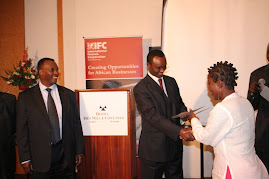
387 people from all sectors of business attended the Launch Ceremony of the Service Mag at the Serena Hotel on Thursday March 25th.


The objective of this free quarterly magazine is to educate and sensitize service people both from the public and provate institutions.


The magazine is in simple English with specific articles in French and Kinyarwanda.


The 48-page-magazine was made possible by the contribution of people from 11 different nationalities and by the kind sponsorship of 15 companies:


Diamond


Caisse Sociale du Rwanda


Ecobank


Platinum


BCR


Inyange Industries


Bralirwa


Sulfo


Serena Hotels


Rwandair


Shei & Enz Consulting


Gold


Fina Bank


BRD


DHL


Kenya Airways


Bronze


Tele10


Ocir Cafe


The ceremony was graced by Clare Akamnazi; the Deputy CEO of the Rwanda Development Board in Charge of Business Operations. and Services.


After the unveiling; guests were offered free copies of the Magazine.


The event was a very funny and humoristic evening with the sketches of Herve and Lilian who were the MC's.


dimanche 21 mars 2010

Let's Embrace "The Service Mag"

http://newtimes.co.rw/index.php?issue=14207&article=3102&week=12


CUSTOMER CARE: Let’s all embrace “The Service Magazine”

By Sandra idossou

It is not news that customer service is still a challenge both in private and public institutions. Many service providers have still not been able to find the exact way of improving their services to customers.

As customers, we are still waiting for the time where the service people will respect us and give us the services they have promised.

As a trainer, I believe that people behave the way they do because they have not be taught. Many still do not understand the importance of a customer to their businesses.

Others still think that the customer has no option and will continue to patronize their services.

If we want service delivery to improve, we need more than just talk and debate. We need to take concrete actions that will help people providers.

Even though there have been a number of initiatives here and there, the service gap is still high, which means that there is need to do more.

Many people still do not have access to either trainings or the customer care handbooks.

It is for this reason that with the sponsorships of fifteen companies in Rwanda, a free quarterly magazine titled “The Service Mag” will be launched at the end of the month.

Creating and maintaining a positive attitude is the most efficient and low-cost investment one can make in order to change their life. A positive attitude is a habit and must be learned through repetition and conscious effort on your part.

A positive attitude is not dependent upon your genetic composition. It depends upon your decision to face your world with enthusiasm and to create a positive environment
Sir Francis Bacon, an English author, courtier and philosopher is famous for his famous quote “Knowledge Is Power”

Actually, attitude is the driving force in our life and without the right attitude, our llives become directionless. The starting point is to believe that you can change.

If you don’t believe it, then you won’t do it. I’m not asking you to think it’s going to be easy or an overnight thing.

The hardest clients that I have to deal with are ones that lack commitment and/or belief because most of my time is spent working on those issues and they are seldom the ones that prompted the contact.

The magazine will be largely distributed among all service providers in Rwanda from taxi driver, down to waiters, to hospitals, to ministries and to all service outlets.

The main objective of the magazine is to sensitize everyone on service and offer basic education on what needs to be done.

We are all collectively responsible for the service image of Rwanda and we just can’t sit and wait for a miracle to happen.

The well designed and very attractive magazine will be printed in 5000 copies and distributed throughout the country.

It will also be published on an interactive website. Segments such as the Human Resources, Hospitality, Quality, Sales, Marketing, Taxes, Communication, Attitudes, Motivation, Lifestyle, Tourism, Hygiene, Personal Development, Branding, Grooming and many more topics will be tacled.

The 48-pages magazine will be written in simple English with some articles in Kinyarwanda and French to be able to attract the diverse readership.

As the magazine will be free to readers, it will therefore need the contribution of many corporate and private organizations.

The publication cist for the first edition was borne by the kind sponsorship of fifteen companies.

We are hereby kindly requesting your partnership to make this magazine a successful one for the benefit of business owners, for people in the service industry but generally for Rwanda as a whole.

We would like to invite business owners to be part of this magazine. We will appreciate their sponsorships so as to offer this magazine free to everyone in the service industry.

Also, we would like to welcome your customer service experiences with our readers.

And lastly, do write to us and give us your feedback after reading this first edition that will be launched on March 25, 2010.

sandra.idossou@sheiconsulting.com

dimanche 14 mars 2010

Building a Strong Relationship with Customers

http://newtimes.co.rw/index.php?issue=14200&article=3052&week=11

CUSTOMER CARE: Building a relationship can attract more clientele

By Sandra idossou

I am writing this article from Nairobi where I traveled to carry out a print job for the Service Magazine that is soon to be launched. Before arriving here, I had in my possession three different price quotations with approximately the same rates except for one which was slightly higher than the other.

I arrived at the airport at about 6 am and I was welcomed by Jane, one of the company’s marketing staff. She had a big smile which gave me less reason to worry about the odd hour of the day.

When we arrived at the premises of her place of work, she gave me a tour of the factory and introduced me to almost everyone.

Jane helped me go to the bank, organize my other appointments, found people to help me and offered to drive me back to the hotel. She almost became part of our team.

The company Jane represents deals with bigger contracts than my small order. The Director said something very interesting about their concept of customer service.

“Customer service is all about relationships, it’s not about the

money. If our customers have good relationships with us, we are sure that we will have good businesses in the future with them.”

Customer service is really not about prices. This company was actually the one with the higher prices but we decided to work with them because of the trust we had in them.

A company’s rates or prices might be higher but if customers see the

value of an offer, they will have no reservation in buying your services. Companies should not fool themselves into thinking that all that customers look for are low prices .

It is no secret that a strong relationship with a customer is the key element in the success of a company. Below are some key actions that will create that stronger relationship with your customers.

Care about your customers


Care is an important element in creating good relationships with your customers. You need to care about the needs of your customers, what they like, who they are etc.

If you do not care, a customer can tell. Care also implies empathy. Dr Maya Angelou said that, “people will forget what you said, people will forget what you did, but people will never forget how you made them feel.” Show care and you can be sure that your customers will not forget that.

Go the extra mile


Be helpful even if there’s no immediate profit in it. Whatever the extra step may be, if you want to provide good customer service, take it. Your customers might not say so to you, but people always notice when you make an extra effort.

To give real service you must add something which cannot be bought or measured with money and that is sincerity and integrity says Douglas Adams.

Build trust

Trust will be one of the strongest things you can do in order to build a better relationship with your customer.

The reason is that people will buy from someone they trust. When you trust someone, you know you are getting a good product, at a good price, and that they care enough to help if there were problems.

Listen

If you listen to your customer, you w

ill build a stronger an

d better relationship. Anyone can talk but it takes a wise person to listen. Take time to listen and understand. Do not jump into conclusions or assumptions. Every customer is different and so are his/her needs.

Customer service is all about relationships. You need to take time to create emotional relationships with your customers.


In my case, will you be surprised if I say that I’ll definitely recommend Jane’s company to anyone who wants professional and quality printing in Nairobi? And this is exactly what good relationships with your customers can do, free advertisement for you and your company.


The author is a customer service consultant working in Rwanda.

www.sheiconsulting.com

WHO IS YOUR BOSS?


CUSTOMER CARE: Who is your boss?

By Sandra idossou

Sam Walton, an American great entrepreneur and the founder of the Wal-Mart stores in USA once said “There is only one boss.The customer. And he can fire everybody in the company from the chairman on down, simply by spending his money somewhere else”.

I would like to share this quote with all the service people today. For me, this quote should be a pre requisite known to every contact person both in the private and public sectors.

Many at times; we tend to forget the importance of Costumers. We see them as a “burden”, an “extra job” or even an “interruption” in our work. We also see them as small, unimportant, ugly, unattractive and insignificant.

But the truth here is that whether that costumer is a driver, a director, a cleaner etc…, he/she is still important to our businesses. You are in that business of yours because that “small and unattractive” costumer has decided to patronize your shop.

This Customer is actually the one who pays your salaries. You owe him/her your lifestyle, our car everything you are able to buy.

When you enter some shops in town; the look you are given as a customer simply says “why did you come here?” or “Why didn’t you go and bother the people in the next shop?”

Your boss may be that manager who pays your salary but what you need to know is that your salary does not come from your manager’s pockets. It comes from the CUSTOMER.

The person you consider your boss and to whom you give the most of respect is just handling the money the “real boss” leaves behind for you. He is also paid by the customer.

The costumer is actually the one who signs your paycheck and who ultimately is your boss.

Some time ago, I was sitting in front of a service person when his immediate manager called him. He simply left without uttering a word of apology and I had to wait there for more than 15mn has his comment when he came back?
“That was the boss who called me; he doesn’t like to be kept on hold”.

I have often seen service people neglecting customers in front of them and showing more respect and care to their supervisors and managers.

We also see lots of discrimination in the way customers are treated. Many customers are given value depending on their dress code, their statutes, the big cars they drive.

Many are belittle because of their physical appearance. Have you already experienced the discrimination made towards you because you were black, small, thin etc.

This is what happened to some friends who went two weeks ago to the Akagera Motors in town to inquire about their new cars.

The sales agent just looked down on them and asked them if they think you could buy a car there? He even went to the extent of asking them to go and look for the small second-hand Toyotas in town.

If you are a manager, take some time and ask your employees who pays their salaries? Well, you are likely to get answers like “the company, the manager, the accounts department etc. But how many of your employees will realize that, it is the “Customer who pays their Salary!

If you are a service person, remember that if you do not show care and attention to the customers who patronize your products and services; they will simply go elsewhere to spend their money. Your costumers are the ones who decide whether your business is going to succeed or fail.

In your next interaction with customers, think of them as “the boss.” You don’t have to call them that, but it will help put your relationship in perspective and will help foster a better customer-focused attitude

The author is a costumer service consultant working in Rwanda.

sandra.idossou@sheiconsulting.com


dimanche 28 février 2010

Time Should Mean Money in Rwanda as well


CUSTOMER CARE: Time should mean money in Rwanda as well

By Sandra idossou

As I start writing this article, I know for sure that many will dislike what they are about to read. I’m probably going to shock you but believe me dear readers, this has to come out.


I have been in an “Enough is Enough” mood for these past weeks that I simply can’t keep quiet anymore on this particular subject. No matter how sensitive certain issues might seem; we need to talk about them so as to improve on them.


I’ll not go by two roads….this ordeal of slow service delivery is just driving me nuts. People are simply to slow. It looks like service many have their whole time in doing certain things that should be done quickly.

Just imagine the time one has to spend in queues in most banks here to access one’s money; an average of one hour in most cases; whereas in some parts of the world, these are operations that take less than two minutes.


Look at the manner in which the cashiers carry themselves; they walk or sit nonchalantly as if hey are forced to be there.


When they finally take your check, it takes them an eternity to serve you. They need to get an authorization from their supervisors who most at times are nowhere to be found.


Service providers should understand that we do not come to their companies to watch television. We have our own television sets at home and our reason for coming in there is to be served quickly so that we can attend to other urgent matters. Believe me; putting in a television in your shop doesn’t reduce the amount of wasted time I spend in there.


But this issue of speed in service delivery does not only concern the banks. This is a critical one cross sectors; from the private to the public; from big to small organizations.


These last few weeks for instance, I wrote to several institutions about a project I’m working n at the moment.


There are just few who take time to respond to correspondences. And when I call for an update, people simply do not understand why I have to “hurry” them. And this is after a three weeks’ wait.


I think Timeliness in Rwanda is a public matter of urgency. As the world continues to speed up, customers have today less time than ever to deal with slow service providers.
The majority of customers want fast services.


They want their service delivery to take the minimum amount of time possible. Customers want service providers they can depend upon; or who simply can deliver when they say they will.


Most of us today hate having to wait and we are no more as patient as before. And that is why we want people in the service industry to be fast. We do not appreciate those who drag their feet; who take hours to respond to a quick question simply because they are afraid of taking responsibility.


Customers require today that you deal with their demand in a timely fashion manner. As a service provider, be proactive; give to your customers undivided attention and concentration.


And when you are walking, show some enthusiasm. Show you are alive. Do not sit in that chair as if you were bored, hungry, tired etc. Remember your non verbal communication sends tones of messages.


Service should not stop or slow down because it has rained. Remember that “Time is free, but it’s priceless. You can’t own it, but you can use it. You can’t keep it, but you can spend it.


Once you’ve lost it, you can never get it back” says Harvey Mackay; one of America’s most popular and entertaining business and motivational speakers.


Timeliness is not a customer satisfaction issue that can be swept under the rug even in Rwanda. I do not agree with people who say that being slow is a Rwandan culture.


It is simply an old habit we have got used to and that needs to change today.


www.sandra.idossou@sheiconsulting.com

The author is a customer service consultant working in Rwanda


dimanche 21 février 2010

Make me become your Loyal Customer

I’m what most people might describe as a loyal person. I always stick to people, products and services I’m used to.

I almost shop at the same places; my tomatoes seller at the Kimironko market is still the same for the past two years; my flower seller down town knows my taste; my telecom service provider is still the same even though there is a new and dynamic company in town; I still drive past some filling stations before arriving at the one I buy my fuel from. Well in a nutshell, I’m a faithful customer to most of my service providers.


I need to confess here that I’m not a good consumer for advertisers as their false publicity does not always attract me. I stick to products and services I have tasted and adopted.


The relationship with my service providers are based on the strong bond that is created with the contact staff I treat with.


I don’t think I’m very different from many of you. Many customers expect superior customer service they pay for. And when their demand is met and; they feel connected to the service provider.


As customers, we do not want to be treated like statistic or numbers along an assembly line. We all want to be treated with respect. We all want to feel appreciated. As costumers; we want business owners to show to us that they appreciate our patronage.


Just imagine yourself as a daily customer of a bank, restaurant, supermarket, or some other establishments in town.


Every time you walk in, the staff recognizes you, calls you by your name, smiles at you, listens to your needs, shows you he/she is happy to serve you, returns your phone calls and resolves your complaints in a timely fashion.


The most important thing to your customer becomes then Excellent Customer Service. Excellent Customer Service is more important to people than the amount of the products, or the over all fees’ they have to pay.


Excellent customer service is a great way to build customer relationships that lead to customer loyalty. What I mean by customer loyalty is that your costumers will not make a quick jump to a new competitor that comes. Even when they are approached by these aggressive competitors; your loyal customers will stick by you.


And that is why as a business owner, you need to make sure that your costumers patronise your products and services because they are satisfied and not because they have no alternative.


Because if that is the case; do not be surprised to see them leave when competition arrives. Remember that we always think that the grass is greener on the other side.


People love to have the peace of mind that whatever product or service they have with you is secure with you.


They like to know that if ever there is a problem, or if they have a question, you will be there to resolve their issue, regardless of what it may be.


Excellent customer service leads to loyalty because if your customers like the way you treat them, they will be happy to refer their friends and family to you.


So dear friend, treat today your customers the way you would treat your friends or family and they will stick with you forever, and provide you with a lot of business.


As says Jeffrey Gitomer, an American author and business professional speaker, “You don’t earn loyalty in a day. You earn loyalty day-by-day”.


So work daily on improving your relationships with the customers and you can be sure that they will become your best advertisers.


dimanche 14 février 2010

Enough is Enough


http://newtimes.co.rw/index.php?issue=14172&article=2863&week=07

Enough Is Enough

By Sandra Idossou

This is one of the days that I don’t know exactly what to write about…not because I’m not inspired but rather because I have had so many different customer experiences this week that I do not know which ones to share with you.

Believe me dear readers, there are really days you think the service people you meet do not know exactly why they woke up to be in their offices or shops. Or should I rather say, they do not know exactly what is expected of them.

But thank God, this week I also met very charming and professional service people who have proven once more that customer service is simply an Attitude and not necessary a Skill.

For the whole week, I went to approximately twenty different service providers to present “The Service Magazine” that will be launched very soon. I was at ministries, government agencies, private businesses, big and small organizations.

After this week experience; I felt like writing again yet another book on Customer Service.

I really think that we need to involve our staffs in the awareness campaign on Customer Service. We need to engage them and empower them. We simply need to invest in them so that they will know exactly how they are supposed to behave towards customers.

I wish I could individually talk to these service people I met but as it is impossible, I will kindly ask you to share this article with your team members.

Let them know that the very small positive or negative behavior they adopt towards customers could go a long way either in improving or destroying your company’s image.

Customer service is most often about Attitudes. Below are some of those Attitudes that really bothered me this week:

1. Please leave your personal problems at home.

In one of the offices I went to, I had the impression that the woman has had the whole world fall on her head. Her face was so sad, unappealing, unattractive etc…She was contagious with her pale face.

If we want to offer good services, we should be able to separate our personal lives to our professional lives. It is not the fault of the customer if your husband or wife is worrying you at home.

Please leave those personal issues at the gate before you start your days. Customers should not be responsible for your personal mood. If they are paying for a service, they deserve the very best.

2. Please greet every customer with a smile and a cheerful disposition.

A smile costs you nothing but it has such a powerful effect on people you meet. I remember this gentleman I met at the Kigali Mayor’s Office; he was so cheerful and happy that I straight away knew that he was happy doing his job.

The good thing about Smiles is that they are contagious. If you smile first, the customer will generally return the smile. Mother Teresa of Calcutta says that “Every time you smile at someone, it is an action of love, a gift to that person, a beautiful thing.”

3. Please avoid your personal conversations in front of the customer

In one of the companies I went to; I had to wait for 7mn for the lady to finish her phone call. Even though I couldn’t understand exactly what she was talking about; from the tone of the conversation, I guessed she was talking about the valentine day program with her boy friend.

It is simply not professional to talk about your personal non-urgent issues on the phone while the customer is waiting and listening.

4. Please be fast and do not drag your feet

As for this one, I nearly felt like pushing people this week. It just seemed like people have the whole day for themselves.

I have the impression that “Time is Money” is not meant for Rwanda. This issue on service speed is so crucial that I will write solely on it in a future article.

5. Please respect the promises you make

Many of the people I met this week promised to get back with me with an appointment but there were just few people who respected that promise.

It seems like giving promises and not fulfilling them is a normal thing. If you say you are going to return a call, please do it. If there is an issue that has not yet been resolved, still call the customer to let him know that you are still working on it.

It will help him to know that he is not being ignored and that you are still remembering your promise.

6. Please be courteous

Courtesy to others is a sign of respect. It shows you have been well educated at home and that you have good manners.

There is nothing wrong is saying “I’m sorry” or “Please” or “Thank you” or “You are welcome” or “have a good day”. Greet people who walk into your office. Do not just sit there and stare at them.

I have often greeted people I meet and all I read in their eyes is “why are you greeting me? Do we know each other?” Greeting is a basic thing that should not be thought to adults. Learn to be polite.

7. Rephrase the customer’s needs to be sure you have understood him

In one of the office, the lady went and did exactly the contrary of my request. She never took time to repeat my demand. Repeating customers’ request shows that you have understood clearly their demand.

It shows that you are listening and want to help. If you can not hear the person or did not understand something, ask the customer: “Will you please repeat that for me?” Do not make assumptions. It is better to repeat than to waste your time and your customer’s time in doing something completely different.

Customer service is all about attitudes. Adopt positive attitudes today and this will have an impact on your personal and professional lives. Winston Churchill says that “Attitude is a little thing that makes a big difference.”

www.sheiconsulting.com


mardi 9 février 2010

Letter from a Regular Reader of My Articles on Customer Service


Wednesday, 10th February 2010


Congratulations to Sandra Idossou and The New Times for completing one year of the Customer Service Series

Clarence Fernandes

Editor,

It is a pleasure to know that The New Times had initiated a year ago, a very interesting “ Customer Service “ series of articles , which have been written regularly by Ms.Sandra Idossou.

This initiative on the part of your newspaper will surely go a long way in improving the overall customer service levels in RWANDA.

I am wishing Sandra and The New Times many more successful years of service to the people of Rwanda.

Kind regards

Clarence FernandesChairman, Rwanda Renaissance


dimanche 7 février 2010

http://newtimes.co.rw/index.php?issue=14165&article=2809&week=06

My One year anniversary as a Customer Care Columnist for the Newtimes


http://one%20year%20of%20customer%20care%20articles%20in%20the%20new%20times/


http://newtimes.co.rw/index.php?issue=14165&article=2809&week=06


One year of Customer Care Articles in The New Times By Sandra Idossou

It has been a year now since I started writing the Customer Care articles in The New Times and I’m quiet impressed by the loyal readership this column has gained over these twelve months.

Based on the numerous feedbacks I receive, I have no doubt that this column has positively affected readers’ lives and produced tangible benefits for the business community here.
I would like to take this opportunity to thank you all for your continued support, for your comments and especially your suggestions.

This column wouldn’t have become the sought-after reading section in The New Times without your loyalty. You cannot imagine how motivated I feel every time I receive your mails.

The first time I was contacted by the OTF team in Rwanda to write an article on Customer Care in The New Times, I felt privileged to be able to share what has actually been my job for the past 12 years.

Let’s recall that In January 2009, President Kagame and his government decided to tackle the issue of poor customer service during their last leadership retreat in Gisenyi.

Even since, the topic of good service delivery has been the talk among business owners. Rwanda is lucky to have its president become the first advocate of good customer care both in the private and public institutions.

Later after that, the Rwandan Development Board (RDB) invited the media to be involved in the nationwide campaign and that is where I actually started this weekly column.

The first article titled “Outstanding Customer Service” was published on February 3rd 2009 and attracted a lot of positive comments. Writing the weekly educative column has become since then an interesting journey.

My personal objective in writing these weekly articles is to contribute to the improvement of service delivery in Rwanda.

I have been living and working in Rwanda for some time now and I feel we are all responsible one way or the way; either as service providers or simply as customers.

Through this column, I feel connected to many people out there even if I do not know them. Sometimes, I write as if I’m talking to friends.

I write based on the experiences I have as a trainer, as a consultant and simply as any normal customer. I often say that a miracle will never happen if we all sit and do nothing. It’s good to complain but it is even better to take actions that will correct those complaints.

From the feedback I receive from readers, I have understood how “addicted” some people have become to this column. Last time, I learnt that there are actually many more people who read this column on internet than by the hard copy of the newspaper.

With the 52 articles already published, I still have the impression that so much more needs to be done. I personally think that the Newtimes should be more accessible to many more people and not only to a certain category of people. People in town need to be able to buy this newspaper on the street.

Another challenge I see is the need of having a reading culture in Rwanda. We cannot improve on our attitudes and skills if we do not read and learn new ways of doing things.

How can we embrace more knowledge if we do not read? The world is moving so fast that sitting there in our offices or businesses thinking that we are the best, is surely an easy way of digging our own potholes.

We need to continuously learn and improve on our ways and systems. I read somewhere that “Knowledge will forever govern ignorance; and a people who mean to be their own governors must arm themselves with the power which knowledge gives”.

In other words, Knowledge is Power. If we want service delivery to improve in Rwanda, we need to empower service people with knowledge. Let’s sensitize people to read.

Let’s offer them the possibility of accessing newspapers, books, magazine and everything that can shape their minds. Empowering through knowledge means that we all put effort in training our people.

One thing is to have the knowledge but the most important thing is to put in to practice. As a frequent reader of this column, are you putting into practice what you read here?

Do you challenge yourself with some of the few lessons you get from these articles? Can you proudly say that you are the first to portray good customer care attitudes in your office? Are you the good example to your people around you?
Let’s not just read, but let’s act.

As Rwanda targets it’s Vision 2020, how far are we today in February 2010? Are our working systems more dynamic and more professional? Are people in our institutions part of this vision? Do they know what role they have to play in order to reach this great vision 2020?

Well, people of and in Rwanda; we have a collective destiny and we need to adopt individual positive mindset and attitudes towards our work that will mould our future as a nation.

Remember that our daily individual Attitude determines our collective Altitude as a nation.
Let’s all decide today to adopt positive ways of behaving towards one another and this is definitely impact on how we behave towards customers.
Thank you once again for your frequent feedback and I hope to receive more this year. sandra.idossou@sheiconsulting.com

dimanche 31 janvier 2010

My Intriguing Job as a "Mystery Shopper"

My Intriguing Job as a "Mystery Shopper"

http://www.newtimes.co.rw/index.php?issue=14158&article=2759&week=05

“For the purpose of confidentiality, I’m not going to give out my name here. You will understand why when I explain to you the type of job I do.


I am what some people call the “Service Police” but as I do not have any rifle or the ability to fine citizens, I prefer to compare my job to a private detector’s. I actually investigate on different types of services on behalf of Shei & Enz Consulting.


My job is simply to go round service providing companies in town, small, big, retail, public, private institutions etc just to experience the type of services they offer to their customers.


This is an exciting job because no one actually knows that I’m paid to pry on what they are doing. When I come round your business, I behave like any normal customer. I ask questions like any customer and I go back to report on what I experienced.


But the difference between a normal customer and myself is that while in your business, I look round everything; the entrance, the decoration, the ambiance, the cleanliness of the areas, the attitudes of your staff, their professionalism, their communication skills etc.


Sometimes, I even look at how the manager or supervisors behave towards their customers. As you know, poor customer service does not only come from junior staff. It is unfortunate that even managers fall short in this.


The last time, I was in the office of a manager, he dealt with me as if I was a rug. He was impatient and aggressive. He had no professional manners and I wondered how he managed to be at that post.


Anyway, coming back to what I really do while standing unattended to in your shop, my attention is also drown to what other customers are saying about your services. You can not imagine the types of complaints I hear from other customers who are waiting.


But then, I do not only listen to customers complaints but also to what your staff are saying among themselves. Most at times, their conversations are on their private personal issues even in front of customers. Sometime ago I was in a hospital and in he waiting area, there were two nurses who were passionately gossiping about one of their Doctors.


They said he was unprofessional and doesn’t always diagnose the right ailments of patients.


After hearing so many horrible things about this doctor, you can imagine my shock when I came in front him. I nearly ran away. Of course, I never trusted him and I never took the medication he prescribed to me.


The huge part of my work is to write in a detailed form, everything that I saw or heard. Good observational and recall skills, honesty, objectivity are part of my required qualities. My reports help companies see the exact areas in their services that need to be improved upon.


I am a “Mystery shopper” and my job helps you to see your business through the eyes of your customers.


Companies who conduct frequent “mystery or secret shops” of their businesses are on a better way of improving on their services. Sometimes, I even use spy cameras and this is an excellent way of making employees become more responsible on their attitudes.


A well-thought out mystery shopper program will allow you to evaluate the accuracy of your training program. It is an excellent way of following up on your staff.


If your employees are taught in a training program that they must greet the customer in a certain way for instance, my report as a mystery shopper will show you if they really put into practice what they have learnt.


If you train your employees, you definitely need to test them as well. As part of the process in mystery shop your company, you need to let your staff be aware of this.


Explain to them why you are planning a mystery shop. This program should never mean to create fear in the minds of your employees. Explain in a positive way that it is part of the “on going” training program of the company and that the best way to improve business is to find out what the customer really wants.


As you are looking for unbiased feedback and results, you need to hire a professional mystery shopping company.

Before becoming a mystery shopper for Shei & Enz for instance, this consulting offered me a variety of trainings to prepare me on this new and exciting job.

Another important element to note here is that Consistency is key to a successful mystery shopping program. It is not a one-off thing. You need to do it frequently and monitor results. Whether the results are positive or negative, you will have to call your employees for a meeting. Praise them first, then sensitize or punish for repeated poor results.


Take corrective measures remember that your mystery shopper experiences the same services as a normal customer”.

A mystery shopper program takes time to create but believe me; it will provide your business continuous outstanding service.

The author is a customer service consultant working in Rwanda

sandra.idossou@sheiconsulting.com


dimanche 24 janvier 2010

Small Deatils have a Huge Impact on Services


http://www.newtimes.co.rw/index.php?issue=14151&article=2694&week=04

Small DeTAILS have a Huge Impact on Services

Monday, 25th January 2010

Email Article


OPINION : Small Details have a huge Impact on service

By Sandra idossou

As good customer service in Rwanda has become the great topic and an important challenge for both the private and public institutions, many think it needs big and expensive strategies for its achievement.

The important thing to remember is that small and seemingly insignificant details have a major impact on service delivery.

Most average organizations ignore or overlook minor customer inconveniences but the fact is that organizations that focus on small little details are more capable of improving on their services.

Customer service is all about details. Sometimes as a customer, you will realize that it is the most insignificant element that draws your attention.

It might just be the greeting of the staff or a simple “thank you” from a service provider that keeps you loyal to a certain number of shops you go to.

Some of those details may be as simple as well dressed and mannered employees, clean bathrooms or something that adds value to your experience as a customer.

If you are in a hotel for instance, it is the small details such as the chocolate or sweet on the hotel pillow in the evening that will amaze your customers. If you are in a restaurant, it might be the warm bread you serve on your breakfast. It could even be the fresh cocktail you offer on the arrival of your customers.

In other words, no matter what service you are into, the simple gesture, a last-minute delivery to a valued customer; the fulfillment of a promise, the smile, the warm welcome and “Thank you for having complained” from attentive staff that matter.

It is one of these simple details that impressed me last week as I was coming back from a training session I conducted in Libreville, Gabon.

At the airport, I met a very smartly dressed woman at the security checkpoint. She was so well dressed that I thought she was an air hostess. She was very friendly, courteous, helpful and smiling to all the passengers.

I couldn’t stop myself from complementing her and asking her what could have been the secret of such an improved service (I have been twice to Gabon and I never saw such friendliness at the airport before).

For your information, this was around 10.30 pm and this awkward time is usually the time many people blame heaven and earth for being obliged to work.

She jokingly replied by saying, “this is probably due to the change of our uniform; ever since we’ve been giving such beautiful uniforms, our confidence has been boosted and this has, I think improved positively on our services”.

I thought about her response and realized at which point business owners sometimes spend huge sums of money on big strategies just to realize that these, “big” strategies are not the real answers to their poor service delivery.

You need to know that the recipe for exceptional service boils down to small details.

When you want to instill a customer service culture in your organization, make every person in your organization be part of it.

Sit together with your team players and analyze the causes of your poor service delivery. As they are in direct contact with customers, they see things you do not see yourself, or hear comments from customers that you might not directly hear.

We all know here in Rwanda a number of theories on what are the causes of service decline. Some people blame it on a shortage of skilled workers; some others blame it on the lack of competition. There are even some who blame customers for keeping quiet and accepting sub standard service.

But I really think that poor customer service is the product of workplace practices. It is chiefly a lack of training for front-line workers, low employee satisfaction and motivation but also poor mindset and attitudes.

If we look again at the example above, we can understand that employee satisfaction is an important antecedent of high quality customer service.

When you take time to listen to your employees, you will understand that the poor services they offer are sometimes caused by the heat in the office or even the seating arrangements. Yes they are details but they have an impact on staff’s mood and services.

Remember for instance that just a simple new stylish uniform can change the entire image of a company. Another simple detail that should not be overlooked is staff identification badges.

Wearing nametags can create a sense of responsibility of your employees. Employees with badges know that if they offer poor services, the customer can report them and this unfortunately brings them to be alert and pay attention to customers.

As part of your 2010 resolutions, take time to solve the small details first. In your plan for this year, consider what small details you can provide or improve on to make your business stand out in the hearts and minds of your customers and of your employees.

The author is a customer service consultant working in Rwanda

www.sheiconsulting.com


mercredi 20 janvier 2010

Training your Staff as part of your 2010 Resolutions

http://www.newtimes.co.rw/index.php?issue=14148&article=2645&week=03

CUSTOMER CARE: Staff training as part of your 2010 resolutions

By Sandra idossou

At an interesting meeting recently with a big business owner in Kigali, the CEO explained to me his plans for the growth of his business in 2010.

He was so proud to announce to me his budget in renovating his office and equipping it with the latest modern technology tools. He became upset when I asked him the percentage of that budget to staff training.

With his eyes widely opened; he simply told said “with all this money I’m going to spend on the renovation, do you want me spend money again on the staff? they should be happy I’m upgrading their working environment”

As we enter a new year; many business owners have new plans and new ideas for their businesses but few are those who have training plans and career development plans for their employees.

An investment that does not take into consideration employees’ commitment is destined to perish because good equipment without staff professionalism will never give a strong competitive edge.

If you think you cannot afford to provide training to your employees, then you need to know that you are surely losing money every minute you wait to improve your employees’ skills and productivity.

A Well-trained staff with refined skills and depth of knowledge can be of great help to achieving customer satisfaction because customer care is definitely linked with staff professionalism.

Training offers personal growth for your team members and it also gives them great skills to assist your customers. Through frequent trainings, your employees will gain in confidence that will enable them deal as professionals in front of your customers.

Even though the economy is tough and many businesses are being forced to cut down on their expenses, you need to understand that training your staff is not an area that should be neglected. Training should be an integral part of your strategic plan for your business.

Some of the numerous advantages in training your staff are:

a) It makes your staff become highly qualified staff
b) It helps them understand what is expected of them
c) It makes your people understand the vision of your company and makes them see in the same direction as you the business owner

d) It is a key factor in staff job satisfaction, motivating and morale among employees
e) It increases efficiencies in processes, resulting in financial gain

If you follow the steps below, your business will gain a lot:

1. Define a Real Training Plan


You will need to prioritize certain trainings from language, communication, attitudes, and welcoming, sales techniques to product knowledge. All these themes are important. But you need to take time to analyze each job to determine the best training.

A training module that was good in a company next door might not adapt to the specific needs of your staff.

2. Chose the Right Training Partner


Training doesn’t have to be extremely expensive to be good but a key element in choosing a training partner is to look for a partner that will understand and accompany your organization.

Be selective as unfortunately not every consultant is a good trainer. A professional trainer will know how to adapt training modules to the local environment of your organization.

3. Chose the Right Methodology


People learn in many different ways. Good trainers know how to engage adults; they are able to prepare activities such as written exercises, group discussions and role-playing scenarios.

Other tools such as video; games etc will help learners to better understand the training content.

If you want the training to be effective, avoid too many slides or theories. People are not interested in long theories but rather concrete examples that will help them change their old bad habits.

4. Ensure there is Training Follow up

The key differentiator of a successful training is ultimately the follow-up. In selecting your trainer, make sure to have a real follow-up plan to help your team put in their working place the new skills they learnt. Follow-up can range from one-on-one coaching to group follow-up sessions.

If you want to have a return on your training investment make sure there is a follow-up in place. You need to have employees demonstrate competency after training. Make sure you choose an inexpensive way to test the effectiveness of the training afterwards.

You can evaluate training performance by the use of simple tools, like a written or verbal test or observation of specific skills.

We for instance at Shei & Enz Consulting, we use mystery shoppers who come to your organization to experience the services offered to customers. Their reports help to monitor and coach progress of trainees.

Often small business owners think that they cannot afford training or...they don’t have time to train. The fact is that, you simply can’t afford not to train your staff.

In today’s vibrant economy, Training is a MUST. Business owners should avoid perceiving training as an expensive burden.

If you decide to invest in your team players today, they will in return be able to offer good services. In 2010 invest in your employees and they will become productive.

This will surely improve on your profits as your company can make a lot of money with well trained employees. So let trainings be part of your top New Year resolutions.

The Author is a Customer Service consultant working in Rwanda

sandra.idossou@sheiconsulting.com


www.sheicosnulting.com


lundi 11 janvier 2010

SHOWING APPRECIATION AS A RESOLUTION FOR 2010

http://www.newtimes.co.rw/index.php?issue=14137&article=2596&week=02


Monday, 11th January 2010

CUSTOMER CARE: Showing appreciation as a resolution for 2010

By Sandra idossou

The festive season has come and gone; filled with glitz and glamour. It has been filled with joy, happiness, family reunion and bonding all over. This has been a perfect time for New Year resolutions but also for exchange of gifts among friends and family members.

Many business owners are using this festive season to show appreciation to their customers for their patronage. I know that showing appreciation to customers is essential for keeping customers loyalty.


Showing appreciation to your customers is a way of showing that you care about them; that you are happy they used your services instead of your competitor’s; It is obvious that the more you show your customers that you truly care about them, the more appreciated they will feel around you and your business in the future. So let’s face it.


As human beings and as customers, we all like to feel appreciated. Yet, too often, many business owners neglect to seize an opportunity to show appreciation. This period is an excellent one to be thankful to your customers for giving you the opportunity to serve them. But then, showing the appreciation to your customers is so much more powerful than just saying it.

There are many small, inexpensive ways to show your customers how much you appreciate their patronage. Of course, consistent customer service is paramount for successful customer appreciation; however, personal daily attention to details can go a long way in making customers feel appreciated.

The details that make your customers stick to your business throughout this New Year are strictly linked to the ways your staff sees and treat each of your customers.

Showing appreciation should not be an end or beginning of year assignments alone. The best way to show your appreciation to your customers is to treat them daily with attention and care through daily attention to each customer.

As a customer, the best appreciation you could show me is to make me feel wanted when I enter your shop. I do not want any hampers; any card; any diary; but rather a consistent friendly, smiling, professional and available staff throughout the year.

If you are a business owner reading this article today; let your staff know that they can everyday show appreciation to their customers by welcoming them friendly.

Let them stop their personal nonproductive conversations when customers walk in front of them. Let them stick to their promises. This is the best sign of respect to people who make your business what it is today.

Showing your appreciation will also mean that you take time as a business owner to have your customers feedback on the services you offer them.

Take time to listen to them. Inevitably you will encounter customer complaints. Don’t shy away from them. Do not blame others. Instead, acknowledge the problems and offer alternative solutions.

Showing appreciation at the beginning of the year implies that as a business owner or a manager, you also thank your staff for their hard work and dedication.

Even if you cannot organize a party for your employees, do offer them something extra, a bonus, a gift etc. Sometimes; a simple “Thank You” can mean a lot to your employees.


Small surprises and tokens of your appreciation spread throughout the year help your employees life feel valued all year long.

As we beginning this New Year, it is also time to analyze the areas that need to be improved upon. Showing appreciation means that you take today the right decisions so that you can offer better services to your customers during the whole of 2010


“Appreciation is a wonderful thing: It makes what is excellent in others belong to us as well” says Voltaire a renowned French writer.

When your customers and your staff feel appreciated they will go out of their way to reciprocate to you by patronizing, bringing you new customers or just offering great ideas to make your business even more successful that what it already is.

The more you value your clients and your staff and show it to them, the more prosperous your business will be in 2010.

I can assure you that if you put in place strategies in increasing your customer satisfaction throughout 2010, this will result in increased repeat business and referrals.

“As we express our gratitude, we must never forget that the highest appreciation is not to utter words, but to live by them.” John Fitzgerald.

So decide today to improve your daily actions towards your customers and employees because genuine appreciation pays dividends.

sandra.idossou@sheiconsulting.com

lundi 4 janvier 2010

CUSTOMER CARE: Looking forward to improved customer service in 2010

Monday, 4th January 2010

http://www.newtimes.co.rw/index.php?issue=14130&article=2552&week=01


CUSTOMER CARE: Looking forward to improved customer service in 2010

By Sandra idossou

Rwanda, the land of a thousand hills and a million smiles has been facing a real challenge in terms of customer service. Even though there are tremendous positive things happening here, tourists, investors and many Rwandans have been complaining about poor service delivery.

Good Customer Care has indeed been the biggest ingredient missing in our service industry and this issue has actually drowned a lot of attention from many people in the society.

While addressing this issue of at the national retreat in Gisenyi in January 2009, President Paul Kagame said that “Customer service remains highly problematic in private, public and civil society domains, something that is most certainly going to preoccupy us in the coming days, months and years,”

Research done by the On the Frontier Group (OTF) and by the Institute of Political Analysis and Research (IPAR) shows that Rwanda’s Gross Domestic Product (GDP) could increase to $40 million per year by 2012 if services are improved.

In March 2009 the government nominated a ten-member national steering committee mandated at rolling out a nationwide customer care campaign in both the public and private sectors.

About Rwf283 million ($500,000) was allocated for this two-year national campaign to improve customer service.Now that the year 2010 has begun we need to review 2009 and project how we shall tackle and improve service delivery in 2010. We need to ask ourselves what have been the major things done in improving customer care in Rwanda? In which areas do we still have to work more in 2010?

There have been a number of positive initiatives in both private and government institutions. The Rwanda Development Board (RDB), the Rwanda Workforce Development (RWD), the Private Sector Federation (PSF) and many other public institutions have all put in place measures in improving service delivery.

Customer Care Trainings

Customer service has indeed become today an urgent necessity especially if the country wants to reach its vision 2020 objectives. Competition has also become even ruder with Rwanda joining the East African Community and service providers have no other choice than training their staff.

Trainings are aimed at helping people deal with customers to be empowered with the right skills and attitudes. Since the whole campaign began, there have been few trainings here and there especially in the private sector.

The financial institutions have been more involved in training their staff. Some trainings have also been organized to the hospitality industry, the police, local governors etc…

But many government institutions are still left behind. Civil servants still think it is a favor they do to customers by serving them.

Mindset still needs to be improved and trainings need to become compulsory for business owners and for government institutions.

Though trainings are not the only remedy in improving customer care in Rwanda; they are an effective way of reducing skill gaps.

Customer Care trainings need to be done properly in respect of the local environment; with a real system of follow up and coaching on the field after training session.

It is probably time that companies and government institutions be encouraged to capture good customer care in their corporate strategies, visions and missions.

Role of the media in the campaign

Poor level of customer care in Rwanda is attributed to the lack of awareness of its importance and this is everywhere; in all sectors both in the public and private, at all levels; managerial, employees and employers and business owners.

As the cause of the problem is basically rooted down to negative attitude towards work and mindset, the whole nation needs to be embarked on this campaign.

This is where the media has a big role in sensitizing the population. Even large rural population and weak professional base need to be involved.

The suggestion for 2010 is for the media to increase its awareness role.

The ‘Customer Care Handbook’

The Private Sector Federation (PSF) in partnership with the Rwanda Development Board (RDB) launched a Customer Care Handbook in English and in Kinyarwanda at the International Trade Fair in August.

This 42 page handbook; written in a simple language is targeted at all people dealing with customers. The 14 chapters deal with topics such as the Importance of the Customer, Why Improve on Customer Care, What the Attitudes I need to adopt, How to communicate with customers etc…

Though there has been positive feedback from business owners on the attractiveness of the handbook, the use of simple language, the Kinyarwanda version; the handbooks are still not available to the public and upcountry.

Rwanda is privileged to have its president and the entire government at the forefront of teaching Rwandans to offer better customer care. But the journey is still long in getting the entire population buy into this vision of good customer care.

Attitudes and mindset still remain big challenges. Efforts still need to be done on skills, language barriers, speedy services, keeping to promises, welcoming, being professional and enthusiastic in dealing with customers, etc.

But as we move into 2010, we all need to become more responsible. Customer Care is the issue of everyone here. Everyone should be part of this fight against poor service.

That is the only way we can improve. Let’s all remember that our altitude as a nation largely depends on our daily individual attitudes.

An old Chinese Proverb says that “It is better to take many small steps in the right direction than to make a great leap forward only to stumble backward.” So let’s all do something in 2010 in improving service delivery in Rwanda.

Excellence is the gradual result of always striving to do better; let’s all improve on our attitudes in 2010.

Wishing you all a better customer care year!

Highlights

Rwanda’s GDP could increase to $40 million per year by 2012 if services are improved.
Rwf283 million ($500,000) was allocated for a two-year customer care national campaign

The author is a customer service consultant working in Rwanda

sandra.idossou@sheiconsulting.com

mardi 22 décembre 2009

Should we blame Management for Poor Customer

http://www.newtimes.co.rw/index.php?issue=14117&article=2453&week=52

Tuesday, 22nd December 2009 E-mail article Print article

CUSTOMER CARE: Should we blame Management for Poor Service?

By Sandra idossou

After each training session, I often spend a lot of time analyzing participants’ evaluation forms as this helps me improve on future trainings. Last month, I read this from a participant:

“This is the best training I have ever attended and I wish my managers and all our supervisors could also go through what we’ve just learnt. I now understand the importance and benefits of customer care for myself and for my company.

But for a real impact on our services, I would kindly request that our managers and supervisors attend the same course because Customer Service should start by them first then cascaded down to every person working in our company.

If our managers and supervisors portray the good example of customer care, I’m sure many employees will do the same”

This is a regular comment from participants. The first message I see here is the need for every staff to understand the importance of good customer care.

Customer care is not a department but rather the daily attitudes of each staff and everyone needs to be involved.
The second message is that customer service has to start from the bottom down to the most inferior person in the organization.

Managers and business owners need to portray good attitudes themselves to be an example for their team members.

Unfortunately in many organizations, there is often a huge gap between what management says and what they actually do. Many managers forget that the most important person in their organization is the customer.

A participant gave an example whereby when the manager calls, she has to run and see him even if she has customers in front of her. Apparently, the manager can’t be put on hold.

Even though I do not want to believe this entirely, this type of managerial behaviors calls for reflection because poor service is sometimes the fault of management.

Management is responsible for instilling a customer service culture

The basic problem in most companies is that people are not made the center of the organizations. Many business owners spend huge amount of money on equipment and systems but nothing much on their staff.

Steve Jobs, the co-founder and Chief Executive Officer of Apples Inc says that “The people who are doing the work are the moving force behind the Macintosh. My job is to create a space for them, to clear out the rest of the organization and keep it at bay”

As a manager, you need to bring every one on board in terms on quality and customer service. You need to create a positive working environment that promotes good customer service attitudes.

Management should be the first to portray good Customer Care attitudes

John C. Maxwell says that “A leader is one who knows the way, goes the way, and shows the way.”

Do you show the good example to your staff? Are they able to see through your daily attitudes how customers should be treated? Are your behaviors the ones you want your team members to portray to customers? Can your people learn from you? Do you do what you preach?

Harold S. Genen says that “Leadership is practiced not so much in words as in attitude and in actions” Let your actions speak for you.

Management should treat staff with Care

As a manager, always remember that your people are your greatest assets. So invest in them. Relate with them positively. Be close to them. Show them empathy. If your staff is being well taken care of, they will definitely do the same towards your customers.

“Pay your people the least possible and you’ll get from them the same.” Malcolm S. Forbes. If you invest in your staff peanuts, your customers will reap the same.

Treat your people with respect and dignity. “You can’t expect your employees to exceed the expectations of your customers if you don’t exceed the employees’ expectations of management says also Howard Schultz, Chairman and CEO of Starbucks.

As a manager, learn to listen also to your junior staff. They are in permanent contact with customers and have more accurate feedback from them.

Once in a while, just spend some time with them without any formal meeting and you will be surprised to hear amazing things on your business.

Management should also take sanctions

A good manager is also the one who knows when and how to take sanctions when things go wrong. If you accept mediocrity from your team members because you want them to like you, you are surely to be blamed for poor customer service in your organization. Be responsible and let your staff understand that you will not tolerate poor customer service.

A good management is nothing more than motivating ordinary people in doing extraordinary things.

Be a motivation to your team members and together, you can achieve good customer service for your own benefit and for the satisfaction of your customers.

The author is a customer service consultant working in Rwanda

www.sheiconsulting.com

sandra.idossou@sheiconsulting.com